Water Damage Restoration in Meridian, ID
Water damage restoration is the cleanup and drying of a home after water has soaked into floors, walls, cabinets, or contents, followed by repair of what cannot be saved. It is a different job from plumbing repair. The plumber fixes the pipe that leaked, and the restoration crew deals with everything the water touched.
This service has its own 24/7 line at (833) 521-1033. Call it once the source is stopped, or at the same time as your plumber if water is spreading.
What to do in the first hour
Time matters more than anything else in water damage. The US Environmental Protection Agency advises drying wet materials within 24 to 48 hours to prevent mold growth.
- Stop the water at the main shutoff, then call a plumber for the leak itself.
- Turn off power to any room where water reaches outlets, cords, or fixtures.
- Photograph and video every wet area before moving anything.
- Move furniture, rugs, electronics, and paper items out of the water.
- Do not use a household vacuum on standing water.
- Stay out of any water that came from a sewer backup.
Not all water is the same
Restoration crews classify water by how contaminated it is. The IICRC S500 standard, the industry's reference for water damage restoration, sorts it into three categories, and the category changes what can be saved.
| Category | Typical Meridian source | What it means for cleanup |
|---|---|---|
| Category 1, clean water | Burst supply pipe, water heater tank failure | Most materials can be dried in place if work starts quickly. |
| Category 2, gray water | Washing machine or dishwasher overflow | Some porous materials may need to be removed. |
| Category 3, black water | Sewer backup, toilet overflow with waste | Carpet, pad, and soaked drywall are usually removed. |
Category definitions summarized from the IICRC S500 standard.
Clean water does not stay clean. Left sitting for a day or two, it can degrade into a higher category, which is one more reason to start drying quickly.
How restoration works, from extraction to rebuild
The crew starts with an inspection and moisture mapping. Meters and thermal cameras show how far water has wicked into walls, under flooring, and into the subfloor, which is often much farther than the visible stain.
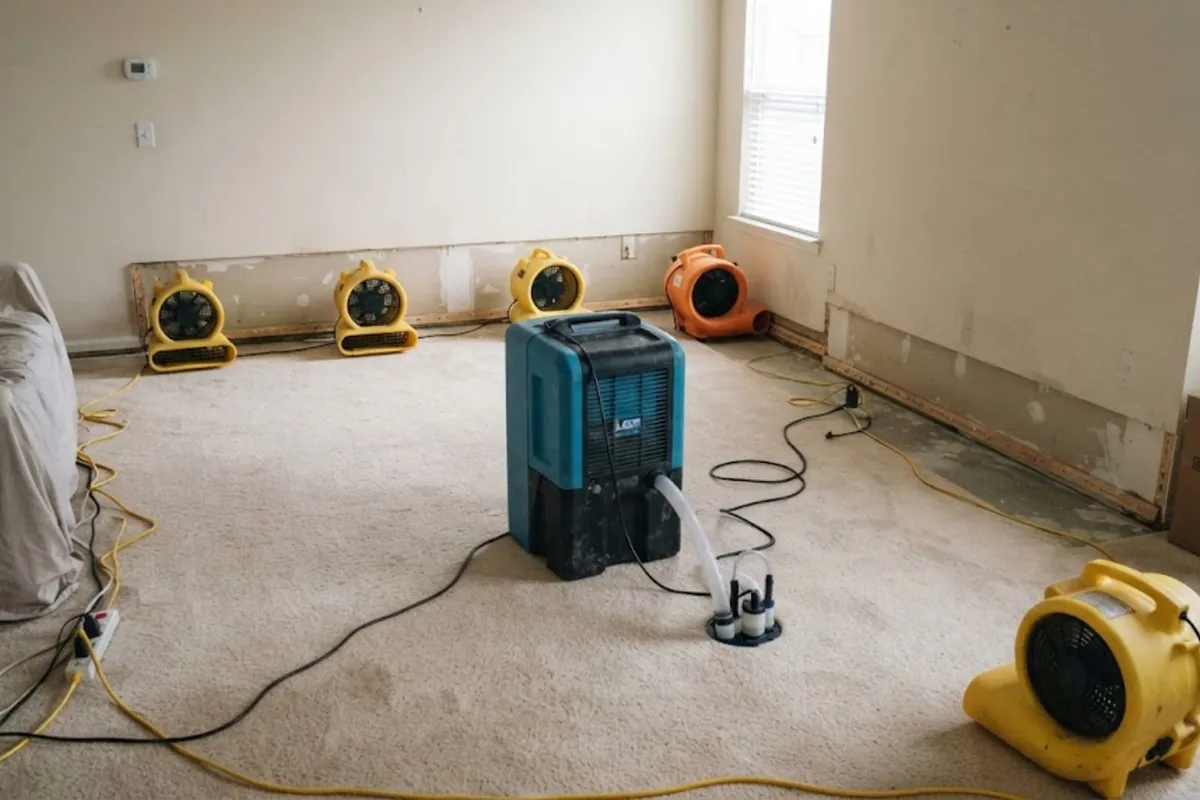
Next comes extraction, using truck-mounted or portable pumps to pull standing water out of carpet and pad. Then drying equipment goes in: air movers to move air across wet surfaces and dehumidifiers to pull that moisture out of the house.
Drying usually takes several days, and the crew checks moisture readings daily until materials reach normal levels. Only then does repair begin, such as replacing drywall, baseboards, flooring, or cabinets that could not be saved.
Homes in their first few winters in Star see the same freeze-burst pattern, often in crawl spaces.
Drying crews in Ada County track progress with moisture meters, air movers, and dehumidifiers, and a break on the street side of the meter should be reported to Meridian Water first, whether the home is near Old Town or north of Chinden.
Where water damage comes from in Meridian homes
Winter freeze bursts are the biggest single source here. Pipes in crawl spaces and exterior walls split during cold snaps and release water into the crawl space, walls, and ceilings when they thaw.
Water heaters are the second. Many Meridian homes keep the tank in the garage or a utility closet, and a tank that fails at the bottom can soak the surrounding floor and walls before anyone notices.
Sewer backups are less common but more serious, because they are Category 3 water. The plumbing side of those calls is covered on our sewer line repair page, and the pipe side of a freeze burst on the burst pipe repair page.
Working with your insurance company
Most homeowners policies cover sudden, accidental water damage. They often exclude gradual leaks, flooding from outside, and sewer backups unless you have a specific endorsement.
- Call your insurer early and get a claim number.
- Keep every photo, video, and moisture reading the crew provides.
- Save damaged items or photograph them before disposal.
- Keep receipts for hotel stays or other costs if the home is not livable.
- Ask your insurer before authorizing large repairs if you are unsure what is covered.
The restoration crew can document the job in the format insurers expect. Coverage decisions are always made by your insurer.
A typical restoration timeline
Every loss is different, but most clean-water jobs follow this general pattern.
| Stage | Typical timing | What happens |
|---|---|---|
| Emergency response | First hours | Source stopped, water extracted, contents moved. |
| Structural drying | Days one to four or so | Air movers and dehumidifiers run, moisture checked daily. |
| Removal of unsalvageable materials | During drying | Wet pad, soaked drywall, and damaged trim removed. |
| Final moisture verification | When readings are normal | Equipment removed, readings documented. |
| Repairs | After drying | Drywall, flooring, and finishes replaced. |
Typical timeline for a clean-water loss. Contaminated water and large losses take longer.
Drying time depends on the materials, the weather, and how long water sat before extraction began. Dense materials like hardwood and subfloor dry more slowly than drywall.
When mold becomes the concern
Mold needs moisture, a food source such as drywall paper or wood, and time. The EPA's guidance to dry materials within 24 to 48 hours is aimed squarely at removing the first ingredient before growth starts.
Crawl spaces and wall cavities are the usual trouble spots, because they stay damp out of sight. A musty smell days after a leak, or staining that spreads on drywall, suggests moisture was left behind.
If mold growth is found, the affected materials usually need removal and the area needs to be dried and cleaned before repairs. For health questions about mold exposure, talk to your physician.
Documenting the loss for your claim
Good records make an insurance claim smoother. Start before cleanup.
- Photos and video of every wet area, including close-ups of damaged items.
- A written list of damaged belongings with approximate age and value.
- The plumber's invoice describing the cause of the leak.
- Daily moisture readings from the drying crew.
- Receipts for any temporary housing or emergency purchases.
What affects the cost of water damage restoration
Restoration is priced by the size and severity of the damage, not by a flat fee.
- The square footage and number of rooms affected.
- The water category, since contaminated water means more removal and cleaning.
- How long materials stayed wet before drying began.
- The number of days drying equipment runs.
- How much drywall, flooring, or cabinetry must be replaced.
Call (833) 521-1033 for an assessment. Pricing is explained before work begins.
Water damage in your Meridian home?
Call the 24/7 restoration line to start drying fast.
Water damage restoration questions
Can I dry things out myself with fans?
For a small spill on hard flooring, fans and open windows may be enough. Once water has soaked into carpet pad, drywall, or a crawl space, household fans rarely dry it fast enough to prevent mold, and professional equipment is the safer choice.
Do I need to leave my home during drying?
Usually not for a clean-water loss in a few rooms. The equipment is noisy, and affected rooms may be off limits. After a sewage backup, those areas should stay closed until they are cleaned.
Will the crew work with my insurance adjuster?
Crews can share photos, moisture readings, and scope notes with your adjuster. Your insurer still makes the coverage decision, so keep your own copies too.
What happens to wet carpet and pad?
Pad is usually replaced because it holds water and is inexpensive. Carpet can often be dried and cleaned in place after a clean-water loss if work starts quickly. Carpet soaked by sewage is removed.
Is water damage restoration the same as plumbing repair?
No. A plumber fixes the pipe or appliance that leaked. Restoration dries and repairs the floors, walls, and contents the water reached.
How fast does mold grow after water damage?
The EPA advises drying wet materials within 24 to 48 hours to prevent mold growth, so the first two days matter most.
How long does drying take?
Usually several days, depending on how much water there was and how long it sat. The crew checks moisture daily until readings are normal.
Does homeowners insurance cover water damage?
Sudden, accidental water damage is usually covered. Gradual leaks and outside flooding often are not, and sewer backups may need a specific endorsement.
Can I stay in my home during drying?
Often yes, if the damage is limited and the water was clean. After a sewer backup, affected areas should be kept off limits until cleaned.
Why is this a different phone number?
Water damage restoration is a separate service from plumbing repair, so it has its own dedicated 24/7 line.