Meridian's Five Water Zones: What 6.7 to 10.2 Grains of Hardness Does to a Water Heater
Meridian's water is hard in almost every part of the city. The City of Meridian's 2024 water quality report lists hardness by zone from 6.70 to 10.16 grains per gallon, with a system average of 8.59. At those levels, a tank water heater collects mineral sediment every year, which causes rumbling, slower hot water recovery, and a shorter tank life unless it is flushed.
This guide explains what happens inside the tank, how your zone changes the maintenance schedule, and when the sediment problem means it is time to repair or replace.
Your zone's hardness, from the city's 2024 report
The city pumps groundwater from wells and reports quality for five zones. Hardness is listed in grains per gallon (gpg).
Water above about 7 gpg is generally classed as hard. Zone 4 sits just under that line, and Zone 5 is the hardest in the city. The city's water quality page includes a map to find your zone.
What hardness does inside the tank
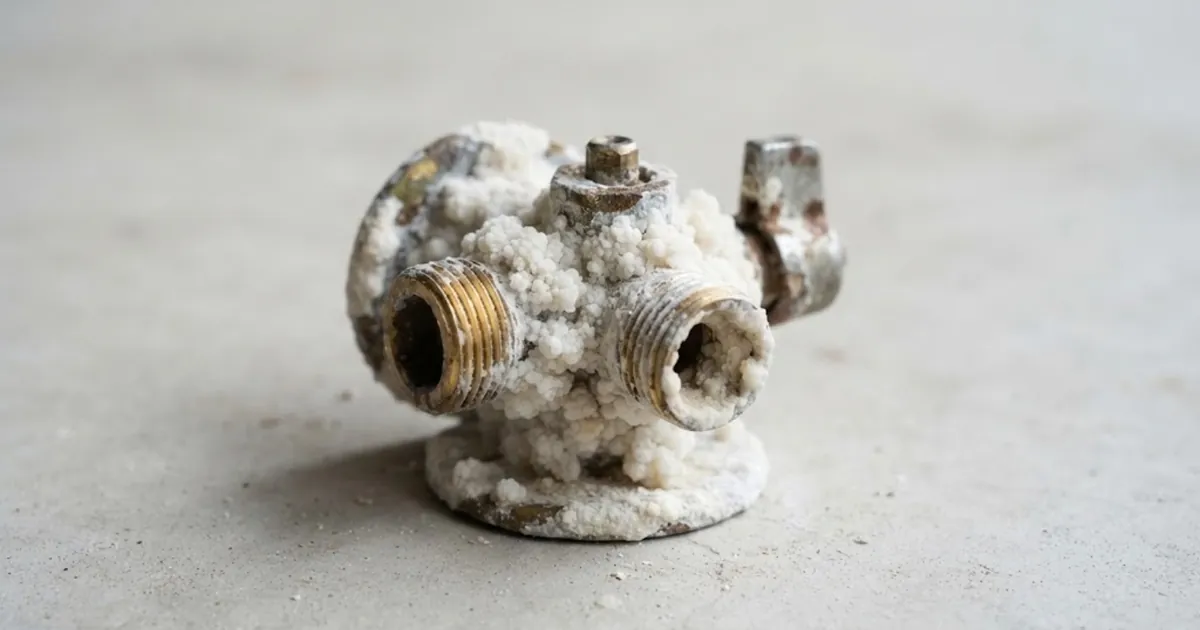
Calcium and magnesium stay dissolved in cold water. When a water heater warms that water, some of the minerals come out of solution and form scale. On a gas heater the scale settles as sediment on the tank bottom, right above the burner. On an electric heater it coats the lower heating element.
Sediment on a gas tank acts like a blanket between the flame and the water. Water trapped under the layer flashes to steam, which is the popping and rumbling sound many Meridian homeowners describe. The burner runs longer to deliver the same hot water, and the steel at the bottom of the tank runs hotter than it was designed to.
On an electric tank, scale insulates the lower element until it overheats and burns out. A dead lower element is one of the most common water heater repairs in hard water areas, and it often shows up as hot water that runs out much faster than it used to.
A maintenance schedule by zone
These are practical starting points for a standard tank heater without a softener. Heavy use or a large household may call for more frequent service.
| Zone and hardness | Flush the tank | Check the anode rod |
|---|---|---|
| Zone 4, 6.70 gpg | Once a year | Every 4 years. |
| Zone 2 and 3, about 8 to 8.7 gpg | Once a year, twice if flushes come out heavy | Every 3 to 4 years. |
| Zone 1, 9.36 gpg | Twice a year is worth considering | Every 3 years. |
| Zone 5, 10.16 gpg | Twice a year | Every 2 to 3 years. |
Suggested starting points based on the city's 2024 hardness figures. Adjust to what you find at each flush.
If the first flush on an older tank comes out thick with sediment and the rumbling does not stop, the layer may have hardened too much to flush out. That is useful information about how much life the tank has left.
The anode rod is the part most people never check
Every steel tank has a sacrificial anode rod, usually magnesium or aluminum, that corrodes so the tank lining does not. Once the rod is used up, the tank itself starts to rust from the inside.
Hard water and heavy use both wear the rod faster. A water softener can wear it even faster, since softened water is more conductive. That is why a heater in a softened home still needs anode checks, often more frequently.
Replacing an anode is inexpensive compared with a new heater, and on a tank that is otherwise healthy, it can add years of service. Our water heater repair service includes anode inspection and replacement.
Signs hardness has already taken a toll
If you notice these, schedule service before the tank fails.
- Popping or rumbling while the burner or element is running.
- Hot water runs out faster than it used to.
- White flakes or grit in faucet aerators and showerheads.
- The relief valve drips or the tank weeps at the bottom.
- Rusty or metallic-smelling hot water, which points to a spent anode.
A weep at the bottom of the tank body usually means the tank has corroded through. That is not repairable, and replacement is the next step.
How to flush a tank water heater
A basic flush takes under an hour. If the drain valve is plastic and very old, consider having a plumber do the first one, since old valves can break.
- Turn a gas heater to pilot, or switch off the breaker for an electric heater.
- Close the cold water supply valve on top of the tank.
- Attach a garden hose to the drain valve and run it to a floor drain or outside.
- Open a hot water faucet in the house so air can enter and the tank can drain.
- Open the drain valve and let the tank empty, watching the water for sediment.
- Briefly open the cold supply with the drain open to stir up and flush remaining sediment.
- Close the drain, refill the tank until water runs steadily from the open hot faucet, then restore gas or power.
Never restore power to an electric heater before the tank is full, since a dry element burns out in seconds. If the water never runs clear, the sediment layer may be too thick to flush.
Would a softener change the math?
A properly sized softener removes most of the hardness before it reaches the water heater, which slows sediment buildup dramatically. In Zone 5, it can be the difference between flushing twice a year and flushing once. Our water softener page covers sizing by zone.
The softener does not replace maintenance. Flushing still clears whatever sediment forms, and the anode still needs checking. Builder-grade tanks installed during the last decade's rapid growth in towns like Star are a good example: many are reaching the age where a first flush and anode check are overdue.
Hard water and water heater questions
How hard is Meridian's water?
The city's 2024 report lists 6.70 to 10.16 grains per gallon by zone, averaging 8.59 across the system.
How often should I flush my water heater in Meridian?
At least once a year. In the harder zones, especially Zone 5, twice a year is worth considering.
Why does my water heater pop and rumble?
Water trapped under a layer of mineral sediment is flashing to steam. Flushing often helps, but a hardened layer may not flush out.
Does a water softener mean I never have to flush the tank?
No. It greatly slows buildup, but the tank still needs periodic flushing and anode checks.
Can hard water void a water heater warranty?
Some manufacturers exclude damage from scale or lack of maintenance, especially on tankless units. Check your warranty terms.