Meridian's Boom-Era Homes: Plumbing Parts Now Reaching the End of Their Life
Homes built in Meridian between about 1995 and 2010 are now 15 to 30 years old, and several of their original plumbing parts are due or overdue for replacement. The usual list is the water heater, toilet fill valves and flappers, braided supply lines, the sprinkler backflow assembly, and in some homes the washing machine hoses and shutoff valves.
That era is most of the city. Meridian had 9,596 residents in 1990, 34,919 in 2000, and 75,092 in 2010, when the census counted 26,674 housing units. A lot of that housing is hitting the same age at the same time.
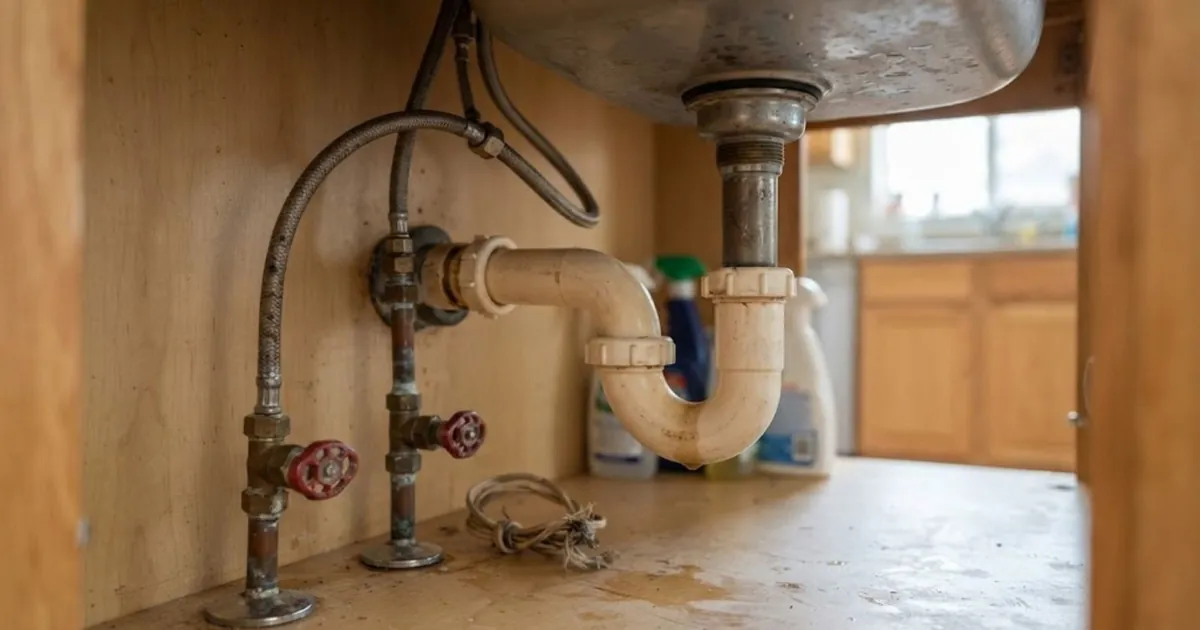
Parts to check, and their typical life
These are general lifespans. Meridian's hard water tends to push many of them toward the short end.
| Part | Typical life | What failure looks like |
|---|---|---|
| Tank water heater | Often 8 to 12 years in hard water | Rumbling, slow recovery, rust, a weep at the base. |
| Toilet flapper and fill valve | Several years, less with hard water | Tank refilling on its own, running toilet. |
| Braided supply lines | Often 10 years or so | Rust at the crimped ends, bulging, drips. |
| Washing machine hoses | About 5 years for rubber hoses | Cracks, bulges, sudden burst. |
| Fixture shutoff valves | Varies, often stiff after 15+ years | Will not turn, drips at the stem. |
| Sprinkler backflow assembly | Repairable, but seals wear | Failed annual test, leaks at start-up. |
Typical service lives. Condition, not age alone, decides replacement.
If your home still has its original water heater from the 2000s, it has likely outlived the typical range already. Our water heater replacement service offers free estimates on planned swaps, which beat an emergency replacement on a cold morning.
What is inside the walls in these homes
Homes from this era were plumbed during a transition. Some have copper supply lines, many have PEX, and some from the late 1990s and early 2000s have CPVC. A smaller number of homes from the early part of the boom may have had polybutylene, which was used nationally into the mid-1990s and is known to fail at its fittings.
Each material ages differently. PEX is generally durable, but crimp and clamp fittings can fail if they were not installed correctly. CPVC can become brittle with age and heat. Copper is long-lived but can develop pinhole leaks.
If you find gray plastic pipe marked PB near your water heater or under sinks, that is polybutylene and worth a closer look. Our repiping page covers replacing it and other aging supply pipe.
A one-hour walkthrough for boom-era homes
Do this once and you will know where your home stands.
- Read the water heater label for its manufacture date.
- Run the toilet dye test on every toilet.
- Check every braided supply line under sinks and toilets for rust at the ends.
- Look at washing machine hoses and replace rubber ones with braided hoses.
- Turn each fixture shutoff valve and note any that are stiff or drip.
- Check the backflow assembly's last test date if your sprinklers are on city water.
- Look in the crawl space for damp soil or drips under bathrooms and the kitchen.
A sensible order for replacements
Start with the parts that fail suddenly and cause water damage: washing machine hoses, braided supply lines, and a water heater past its typical life. These are inexpensive compared with the damage they can cause.
Next, handle the parts that waste water quietly, such as running toilets and dripping fixtures. Then plan the larger items, like a repipe if your home has polybutylene or brittle CPVC, on your own schedule rather than after a failure.
Budgeting for the replacement cycle
Spreading replacements out keeps them manageable. Small parts like supply lines, washing machine hoses, and toilet valves cost little and can be done in one visit. A water heater is a larger but predictable expense. A repipe is the big item, and only some homes need it.
The most expensive path is waiting for each part to fail on its own. A burst supply line or washing machine hose can flood a room in minutes, and a water heater that leaks from the tank bottom can soak a garage or closet before anyone notices.
A practical plan is to handle the quick, cheap parts this year, schedule the water heater if it is past its typical life, and get a repipe estimate only if the walkthrough turns up polybutylene, brittle CPVC, or repeat leaks.
Safety and insurance details worth checking now
A few quick checks reduce the chance that a failure turns into a claim, and make a claim smoother if one happens.
- Confirm the water heater's relief valve has a discharge pipe routed to a safe spot, and do not cap it.
- Check that the water heater has a drain pan if it sits above a finished floor.
- Replace rubber washing machine hoses with braided hoses, and avoid running the washer while nobody is home.
- Photograph the water heater label, supply lines, and shutoff valves for your records.
- Ask your insurer how they treat sudden leaks versus slow leaks, since the difference often decides coverage.
Most policies treat a sudden burst differently from damage that built up over months, which is one more reason to catch aging parts before they fail.
Buying a boom-era home
If you are buying a home from this period, ask for the water heater's age and any service records. Check the supply pipe material under sinks and at the water heater, and look at the washing machine hoses during the walkthrough.
These details rarely kill a deal, but they shape the first year's budget. A buyer who knows the heater is original and the hoses are rubber can plan those replacements instead of discovering them the hard way.
The same timeline across the valley
Meridian was not the only town to boom in those years. Eagle more than tripled its population during the 1990s and nearly doubled again over the next decade, and its homes from that period are hitting the same replacement cycle, often with larger water heaters and recirculation pumps added to the list.
Boom-era home plumbing questions
My Meridian home was built in 2004. What should I replace first?
Check the water heater's age, washing machine hoses, and braided supply lines first. They fail suddenly and cause the most damage.
How do I know if my home has polybutylene?
Look for gray plastic pipe marked PB near the water heater or under sinks. It was used nationally into the mid-1990s.
Is PEX from the 2000s still good?
Usually. The pipe itself is durable. Fittings are the more common failure point.
Should I replace a water heater that still works?
If it is well past its typical life and showing signs like rumbling or rust, planned replacement avoids an emergency and possible water damage.
How often should I replace washing machine hoses?
Rubber hoses about every five years. Braided stainless hoses last longer but still need checking.