Dual Connection Removal in Meridian, ID: How to Tell If You Have One and What to Do
A dual connection is a sprinkler setup that can draw water from both the City of Meridian drinking water supply and a pressurized irrigation system. Meridian does not allow dual connections for residential use, and any that exist must be removed so the sprinklers take water from one source only.
Most homeowners with a dual connection did not create it. It was often added years ago so the lawn could stay green when irrigation water was off. This guide covers how to spot one, why the city cares, and what removal usually looks like.
Why the city treats this as a serious problem
Pressurized irrigation water is canal water. It is not treated to drinking water standards, and it can carry soil, fertilizer, animal waste, and whatever washes into the canal system. Meridian's irrigation network traces back to the Settlers' Irrigation Ditch of 1892 and still serves much of the city through the Nampa-Meridian and Settlers irrigation districts.
When a sprinkler system connects to both sources, a pressure difference can push irrigation water into the city pipes. If the irrigation side is pressurized higher than the drinking water side, canal water can move backward into your home's supply and beyond it into the street main.
That is why the City Water Division says plainly that dual or cross connections are not allowed within Meridian for residential use, and why backflow testers are required to report any interconnect they find on their test reports.
Signs your sprinklers may be dual connected
You do not need tools to check. Walk the sprinkler supply from the house and the irrigation box and look for these.
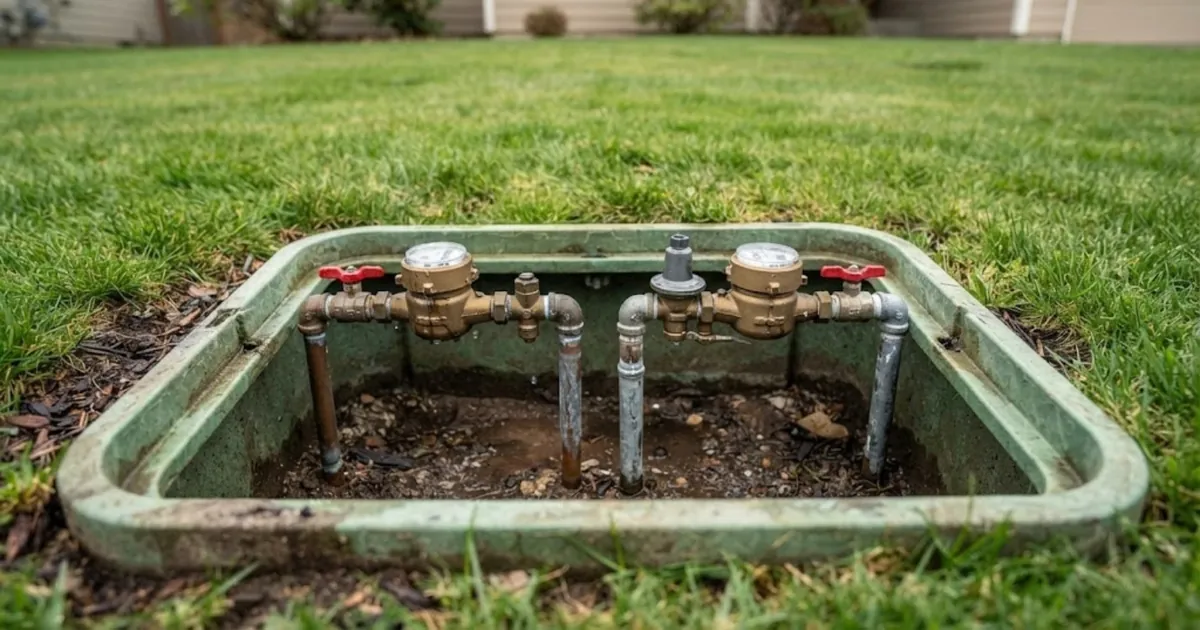
- Two separate supply pipes feeding the same sprinkler mainline, one from the house and one from an irrigation box.
- A valve or hose connection that lets you switch the sprinklers from irrigation water to house water.
- A backflow assembly on a line that also connects to irrigation water.
- Sprinklers that keep running normally when irrigation water is shut off for the season.
- A note on a backflow test report about an interconnect.
If you find one of these, stop using the city water side for the sprinklers until the setup is sorted out.
What removal usually involves
The right fix depends on which source you want to keep. The goal is the same in every case: one supply, fully separated from the other.
| If you keep | What gets done | What to know |
|---|---|---|
| Pressurized irrigation only | The city water feed to the sprinklers is cut and capped at the source | Sprinklers stop when irrigation water is off for the season. |
| City water only | The irrigation connection is cut and capped, and an approved backflow assembly protects the city water side | Water bill rises in summer, and the assembly needs its annual test. |
| Both, on separate systems | Two completely independent sprinkler systems with no shared piping | Uncommon and more costly, but allowed if truly separate. |
General approaches. The city's dual connection removal requirements set the exact standard.
The city publishes dual connection removal requirements. The work should follow them exactly, since an inspector or tester will check the result.
Choosing which side to keep
Pressurized irrigation is usually far cheaper for watering a lawn than treated city water. For most homes with access to it, keeping irrigation and removing the city feed makes sense. The trade-off is the shoulder seasons, when irrigation water has not started yet or has already shut off.
Homes without reliable irrigation access, or with small lots, sometimes choose city water instead. That route requires a backflow preventer on the sprinkler line, a permit to install it, and a test every year. Our backflow testing and installation service covers that setup.
Either way, the removal is small plumbing work compared with most repairs. The pipe is shallow, and the change usually happens right at the connection point near the house or the irrigation box.
The same canals serve neighboring towns
Meridian is not unusual in having canal water and drinking water running side by side. In Kuna, Indian Creek runs through town as an irrigation canal fed by the New York Canal, and Kuna also requires annual backflow inspections on sprinkler systems. The logic is the same: keep canal water and drinking water apart.
Dual connections and selling a home
A dual connection can surface during a sale. A buyer's inspector may notice two supplies feeding the sprinklers, or the annual backflow test report may mention an interconnect. Either way it becomes a repair request late in the process, when schedules are tight.
Handling it before listing is simpler. The work is small, it can be done on your schedule, and you can hand buyers a clean record showing the sprinklers draw from one source with the right protection in place.
If you are buying, ask the seller how the sprinklers are supplied and whether the backflow assembly has a current passing test. A two-minute look at the sprinkler supply during the inspection can save a surprise after closing.
After the connection is removed
A few follow-up checks make sure the fix holds.
- Confirm there is no leftover valve or hose bib that could reconnect the two systems.
- If you kept city water, schedule the backflow assembly's annual test.
- Keep the paperwork, since future buyers and testers may ask.
- Check the water meter with sprinklers off to confirm no hidden leak was left behind.
If the meter keeps moving after the work, the problem may be in the buried service line rather than the sprinklers. Our water line repair page explains how that line is checked.
Dual connection questions
Does removing a dual connection need a permit?
Work that adds or replaces a backflow assembly requires a permit from Meridian Building Services. Ask the Water Division how its removal requirements apply to your setup.
Are dual connections illegal in Meridian?
They are not allowed within the City of Meridian for residential use and must be removed if currently installed.
Who finds dual connections?
Often a backflow tester during the annual test. Testers are required to report interconnects between city water and pressurized irrigation.
Can I keep both water sources for my sprinklers?
Only if they run as two completely separate systems with no shared piping.
Is removing a dual connection expensive?
It is usually modest work at the connection point. The cost rises if a backflow assembly has to be added to keep city water.
Why would a previous owner have set this up?
Usually to keep watering when irrigation water was off. It is a common setup that the city now requires to be removed.